VAT registration shouldn’t come as a surprise.
As your business grows, monitoring turnover becomes increasingly important — particularly when you begin approaching the VAT registration threshold.
But VAT shouldn’t be viewed simply as another HMRC compliance requirement.
It can affect your pricing, profit margins, customers, competitiveness and cash flow.
One important mistake to avoid
The VAT registration test isn’t simply:
“How much did I sell during my accounting year?”
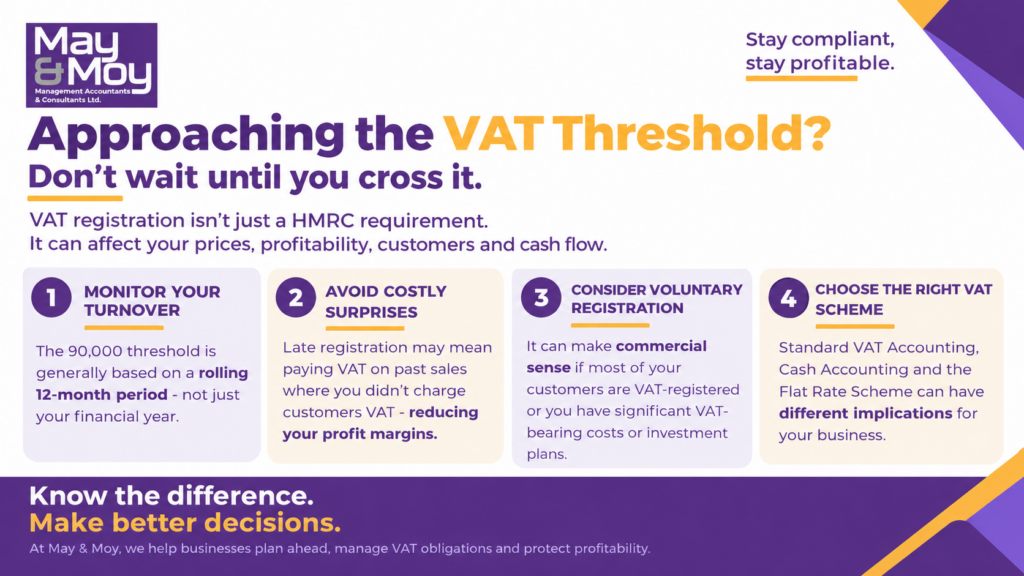
For compulsory registration, you generally need to monitor your VAT-taxable turnover over a rolling 12-month period.
That means looking back at the previous 12 months on an ongoing basis — not simply waiting until your year-end accounts are prepared.
By then, you could already have crossed the threshold.
What happens if you don’t monitor it?
Late VAT registration can become expensive.
HMRC may require VAT to be accounted for from the date you should have been registered.
The difficulty is that if you didn’t charge your customers VAT at the time, you may not always be able to recover that additional amount from them afterwards.
The VAT could therefore have to come out of your existing income — directly affecting your margin.
But should you register voluntarily before reaching the threshold?
Possibly.
For some businesses, voluntary VAT registration can make commercial sense, particularly where:
• Most customers are VAT-registered businesses
• The business incurs significant VAT on its costs
• Major investment or equipment purchases are planned
• Registration supports the business’s growth strategy
But for businesses selling mainly to consumers or organisations that cannot fully recover VAT, registration can create a very different pricing challenge.
The real question isn’t simply:
“Do I have to register for VAT?”
It should also be:
“What would VAT registration mean for my prices, customers, margins and cash flow?”
And once registered, the next question is whether the VAT scheme you use is appropriate for the way your business operates.
Standard VAT accounting, Cash Accounting and the Flat Rate Scheme can have different implications.
VAT should be planned for — not discovered after the threshold has already been crossed.
At May & Moy Management Accountants & Consultants, we help businesses understand their VAT obligations and consider the wider financial impact of VAT as they grow.
Stay compliant, stay profitable.